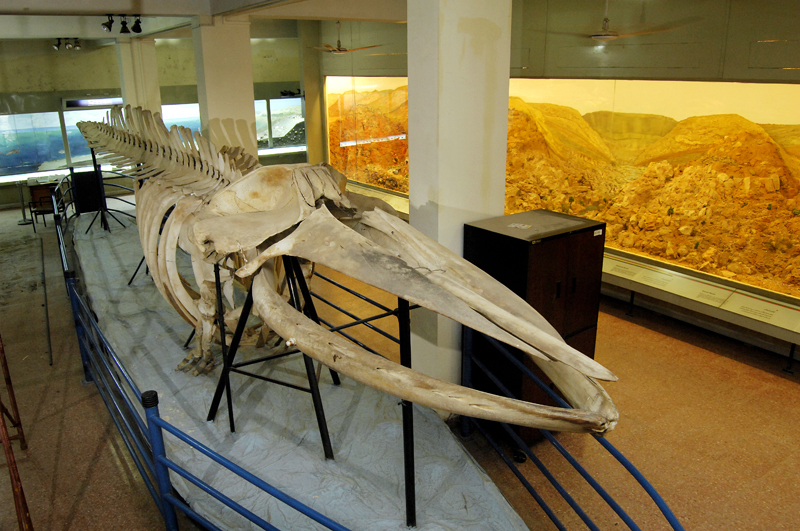
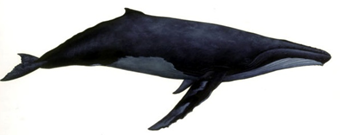
Blue whale (Balaenoptera musculus) belongs to class Mammalia and are found in all oceans of the world, native to Arctic, Indian, Atlantic and Pacific Oceans.They are found in the temperate / tropical / polar salt water. Blue whales are slate to grayish blue in color with lighter spots on its body. They are the largest animals ever existed on earth. Its average length in adult is 25m. Its young ones born in warm, low latitude waters in the winter season. They sexually mature in about five years.They can swim upto 48 km/hr. Blue whales are filter feeder and its diet is principally crustaceans. Adult whales can ingest three to four tons of crustaceans per day. This specie is declared as "endangered" and is listed in Appendix I of both Convention on International Trade of Endangered Species (CITES) and Convention on Migratory Species (CMS).
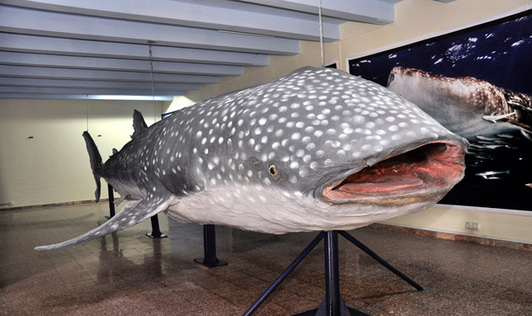
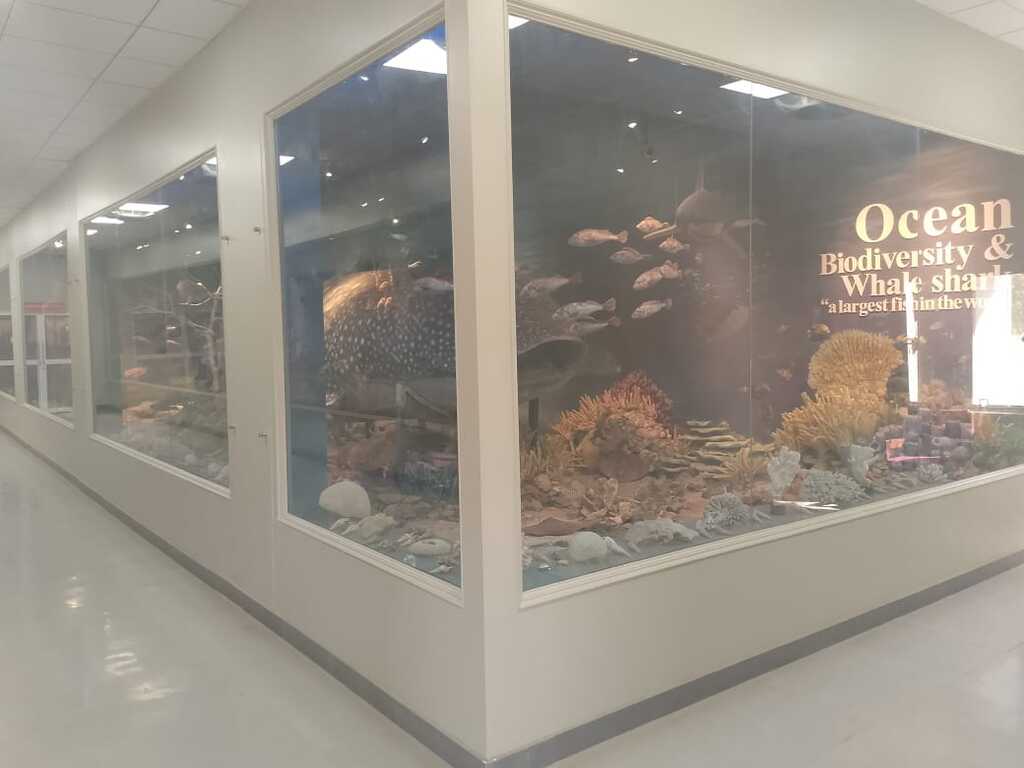
The whale shark (Rhincodon typus) is the largest known fish in the world. This is a slow-moving filter feeding shark belonging to the class Chondricthyes (cartilaginous fishes). It is a rare species and has been declared as "vulnerable" by IUCN, because its population is decreasing at an alarming rate. It is called whale shark as it attains huge size and it’s feeding habit resembles to whales. The displayed whale shark specimen is about 40 feet long and weighed approximately 16 tones at the time of capture. It is the biggest specimen ever recorded in the world. This specimen was 50 years old when caught on the coast of Karachi. Its liver weighed about 800 kg and the weight of ovary was approximately 120 kg with nearly 500 eggs. The died specimen was seen on February 6, 2012 in the Ghorabari area of Pakistani territory in the Arabian Sea. It was brought to Karachi Fish Harbour on February 7, 2012. Karachi Fish Harbour Authority and Marine Fisheries Department initially took the possession of this huge shark specimen. Meanwhile, Pakistan Museum of Natural History remained in close contact with the Karachi Fish Harbour Authority and Marine Fisheries Department. With consent of all the stakeholders, it was decided that this unique specimen should be preserved and displayed in the Pakistan Museum of Natural History for future research and education. The specimens has been reconstructed and mounted with the help of UNESCO and displayed in PMNH for educating the general public and students.
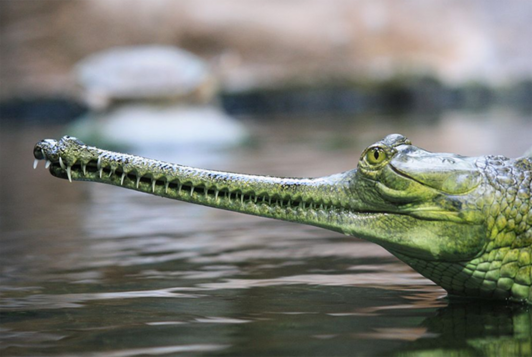
The gharial (Gavialis gangeticus), also known as the gavial, belongs to the family Gavialidae. This species is native to the northern part of Indus River in Pakistan. It has dark or light olive like dark cross-bands and speckling on the head, body and tail. Its extremely long, thin jaws, are an adaptation to catch fish. Males reach up to 6m in size with an average weight of around 160kg.
From conservation point of view, it is listed on “CITES Appendix I” which means it is illegal to carry out its trade and has been declared as “Critically Endangered” specie by the IUCN. The gavial has almost become extinct from Pakistan largely due to growing and uncontrolled anthropogenic pressures including depletion of fish resources. Little research has been conducted on its adaptation, migration and other key aspects.
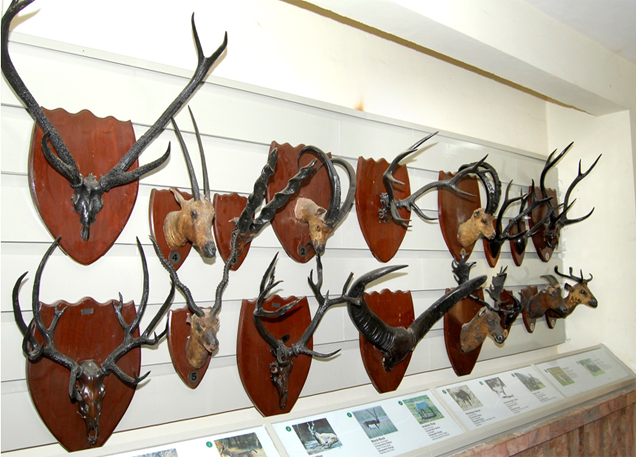
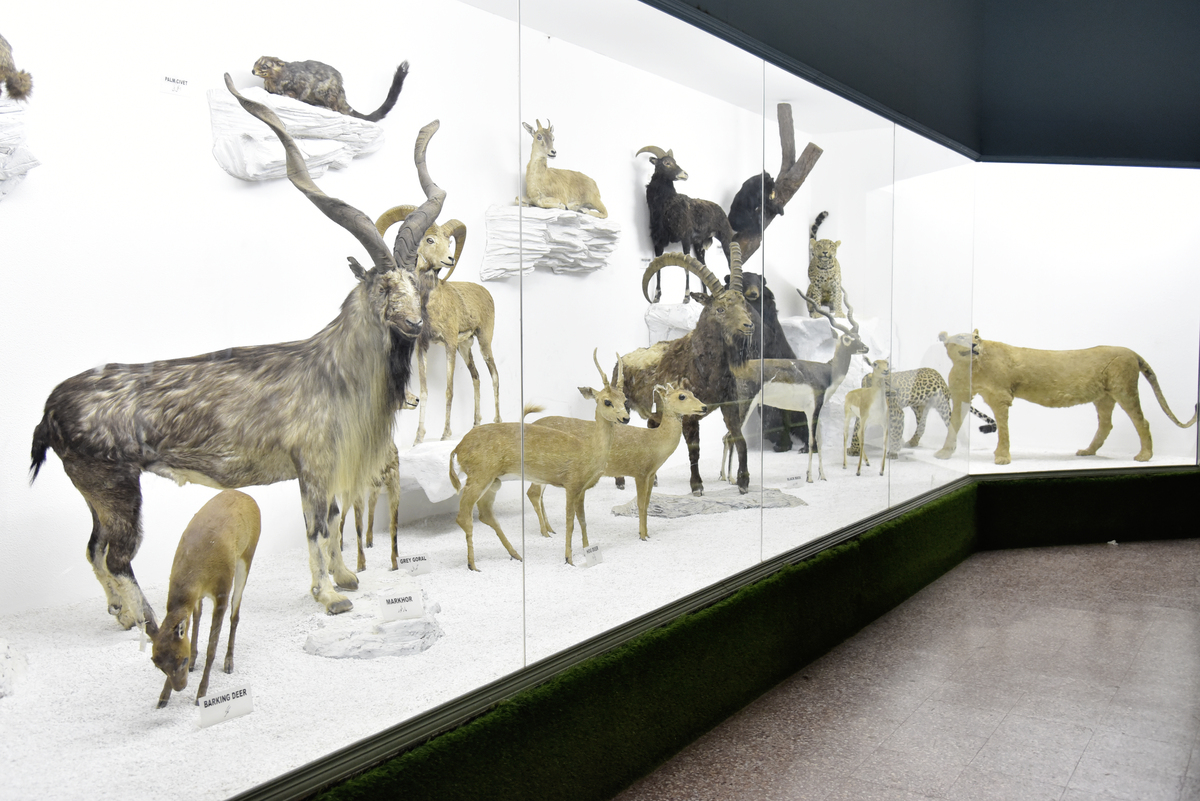
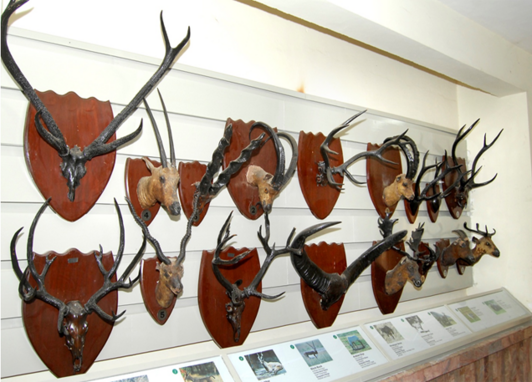
The Mammalian Trophy Diorama at PMNH is one of its kinds in the country and has 36 trophies of 18 different species of hoofed animals. This diorama reflects over a century old picture of mammalian fauna of our country. Some of the displayed specimens have been declared as extinct in the wild including Schomburgk's Deer & Black Buck, while very thin populations of other species such as Marco-polo Sheep, Markhor, Himalayan Serow, Nilgiri Tahr, Himalayan Tahr, and Kashmir Stag can still be observed in some limited areas. The Mammalian Trophy Diorama makes us realize our responsibilities towards biodiversity conservation and motivates us to take suitable measures so that our future generations could be able to see such beautiful animals in their natural habitats, rather than hanging on the walls of the museums.
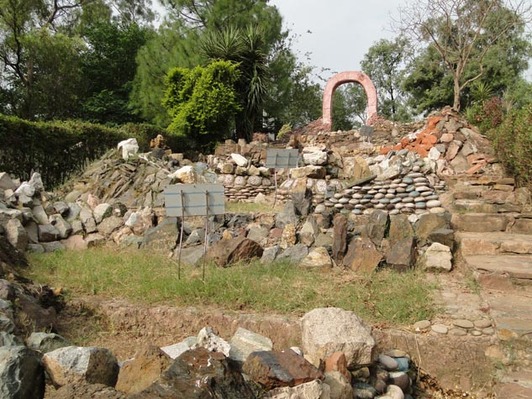
PMNH has created a Rock Garden to provide information and knowledge to the students and general public about different types of rocks found in Pakistan. Igneous, Sedimentary and Metamorphic rock samples displayed in this garden have been collected from Swat, Kashmir, Hazara, Chitral, Gilgit, Zhob, Chagai, Hunza Valley, Kirthar Range, Sulaiman Range and Salt Range. This huge collection is the result of massive and extensive filed works carried out by ESD scientists in different regions of Pakistan. All three types of rocks ranging from 2900 million to 9 million years could be seen in the Rock Garden at PMNH.
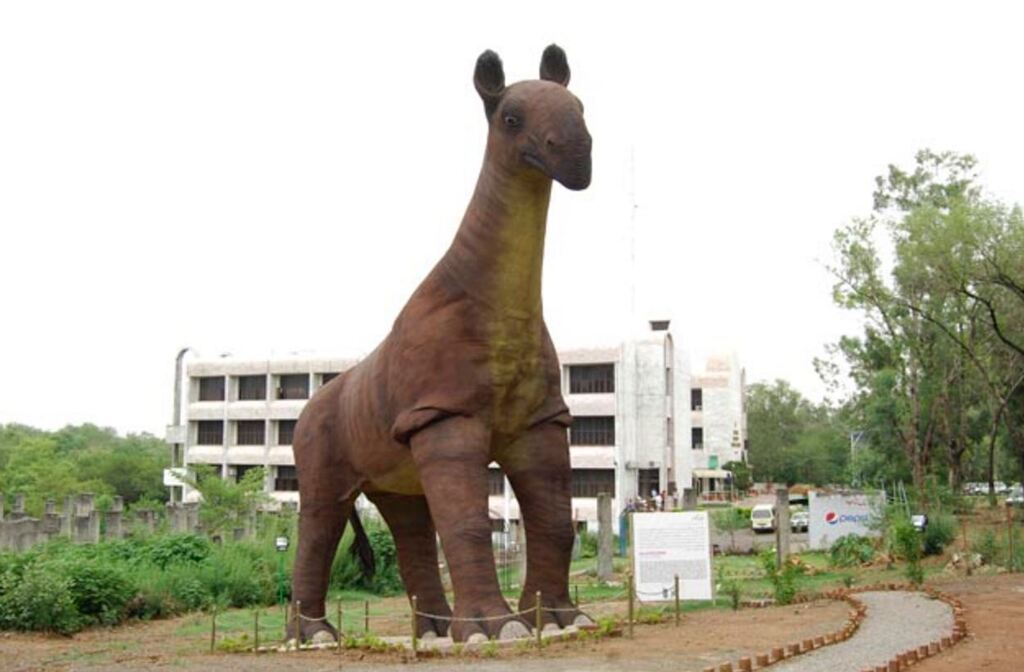
Baluchitherium is one of the largest land mammal (Rhino) lived about 30 millions ago. It is called Baluchitherium (“Baluchi” for Balochistan: “therium” for Beast) literally means the “beast of Balochistan” and was named so because it was first discovered from the Bugti Hills, Balochistan. The average height of an adult Baluchitherium is estimated to be 18 feet at the shoulder, and approximate weight is 20 tons. Life size model of this huge mammal is displayed in the Pakistan Museum of Natural History for the students and public.
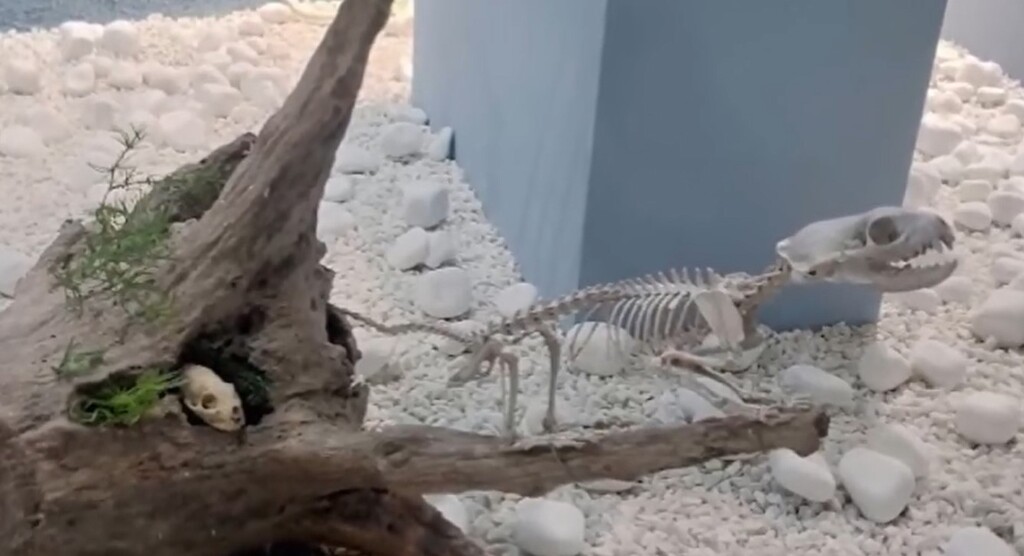
The Skeleton Diorama at PMNH showcases an impressive collection of skeletal displays of various animal species, offering visitors a fascinating glimpse into the structural framework of vertebrates. Carefully arranged and scientifically accurate, this exhibit highlights the diversity, evolution, and adaptation of animal forms through their skeletal anatomy. It serves as an educational resource for students and researchers, illustrating how bones support movement, protect vital organs, and reveal clues about an animal’s lifestyle and habitat. The diorama is both informative and visually striking, making it a popular attraction for learners and nature enthusiasts alike.
The Whale Shark Exhibit is one of PMNH’s most iconic attractions, featuring the life-size preserved specimen of the world’s largest fish. This impressive display offers insight into the biology, behavior, and conservation of this gentle ocean giant. Visitors are fascinated by its sheer size and unique features, making it a must-see highlight of the museum.